
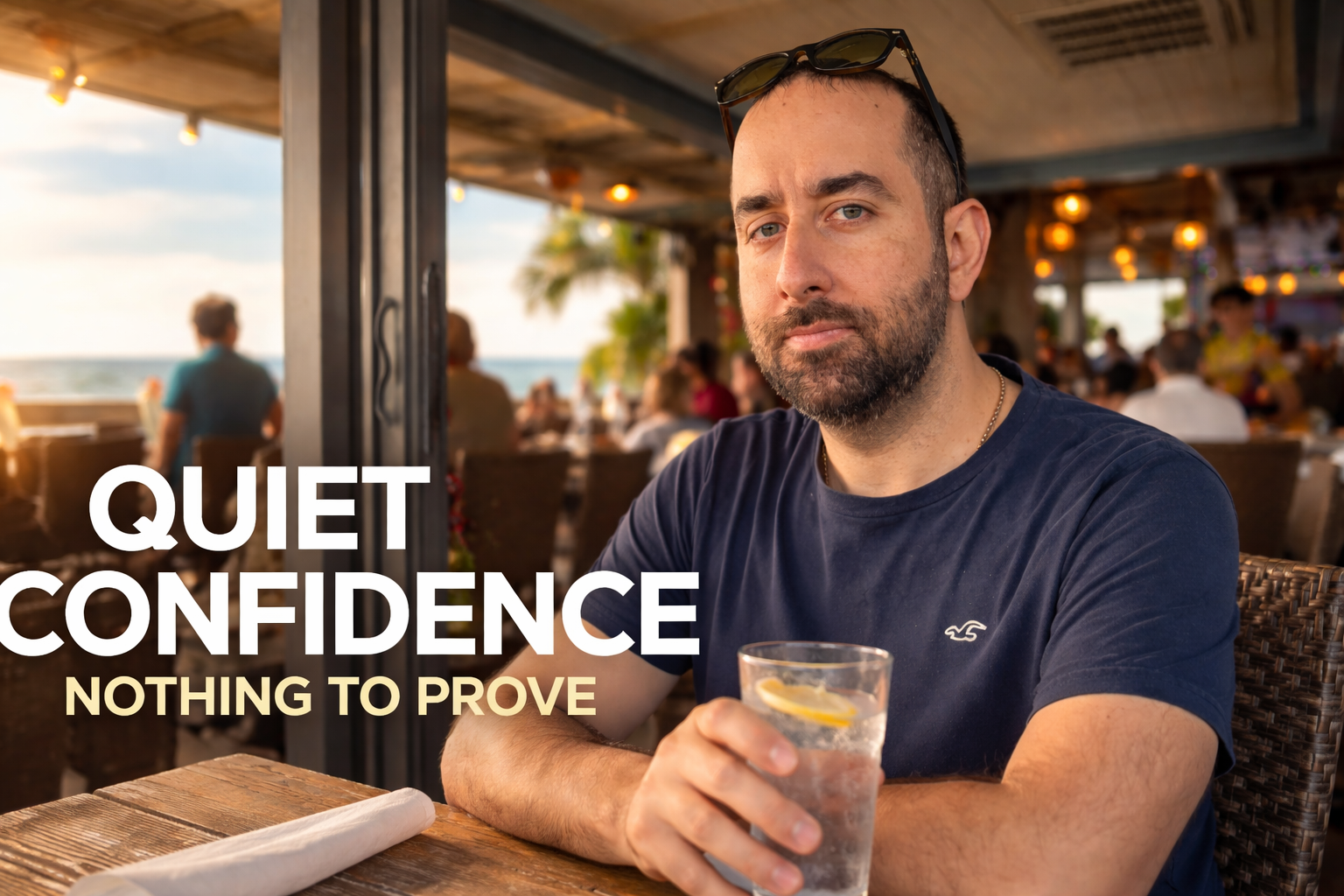
The culture of proving.
Today’s landscape tends to reward visibility, performance, and loudness. Even in the Church, we often engage in scenarios that cultivate performative behavior. Social media tends to touch that reward of visibility even in the absence of our “real life” presence. I remember a specific moment not long ago: I caught myself pausing before posting a photo online, tweaking the caption over and over, thinking about what would get the most likes or admiration. In that moment, it was not about sharing something meaningful—it was about chasing applause. How many of us have dipped our toes, or even drowned, in the waves of curated profiles and attention-seeking behavior?
This pull to prove ourselves is not limited to social media. It shows up in group chats, where there’s subtle pressure to reply with something witty or impressive to maintain a certain image. It’s present on dating apps, where the temptation is to present a polished version of ourselves or measure our worth by the number of matches and messages we receive. Even in church volunteering or ministry meetings, it’s easy to get caught up in who is seen as “most committed” or who gets recognized for serving. These everyday moments remind us that the desire for approval and the struggle with performative habits can seep into nearly every area of our lives.
Dating, another sector of consideration, puts us in a position where charm is the golden standard and doing things right is applauded over authenticity. If we observe those in positions of leadership and power, we see that loud voices and actions, in both literal and figurative senses, are weighted more heavily than the wisdom that whispers. Our culture doesn’t always pay proper attention to alternative voices that don’t put on that extra flash. The superior ideas can go unnoticed. Meanwhile, those evoked with the greatest confidence garner the majority of the attention and acceptance.
To make this tension clear, here’s a side-by-side look at the world’s metrics versus the values of God’s kingdom:
Worldly Metrics:
- Charm and surface charisma
- Loudness and self-promotion
- Quick results and instant approval
- Applause from the crowd
- Flashy displays of success
Kingdom Metrics:
- Wisdom that whispers quietly
- Authenticity and humility
- Steadfastness and faithfulness over time
- Seeking God’s approval above all
- Serving without needing recognition
The contrast is sharp: what draws acclaim in the world often runs opposite to what pleases God.
God’s kingdom doesn’t work the same way. Instead of attempting to delight mankind, we operate in an attempt to delight our Maker (Galatians 1:10). If God is our ultimate audience, why do so many of us care excessively about what others think? Isn’t it our focus and duty as believers to pursue God’s blessing over slavery to the whims of people’s emotions (John 5:44)?
Take a moment to reflect: Can you recall a recent situation where you found yourself seeking approval from others, whether at work, in a relationship, or even on social media? What motivated you in that moment, and how might things have been different if your primary focus had been on pleasing God instead of people? Allowing yourself to honestly answer these questions can reveal areas where you still feel the pull to prove, and help you invite God’s grace to transform your perspective.
For example, some of us fall into the trap of talking ourselves up and placing unnecessary pressure upon ourselves. In an attempt to look better in the eyes of man, we’re expending unnecessary energy trying to impress people (Proverbs 27:2). We need to catch these moments and remember that we’re not called to market ourselves. If someone genuinely doesn’t appreciate your value, ask yourself why you are seeking their approval or validation. When God’s approval settles you, human applause loses urgency (2 Timothy 2:14-16).
Granted, I am not saying that you turn down words of encouragement, affirmation, or admiration from your loved ones and peers. What I will suggest is not allowing their praise to determine the way you view your own self-worth or think you have fallen short because someone’s criticism of you got under your skin.
Quiet confidence isn’t…
There are a few considerations that I will emphasize to make sure we’re on the same page. Quiet confidence isn’t a proliferation of passivity, timidity, insecurity, or fear in your life. It’s when our strength is based on the joy of the Lord over man’s applause. It’s facing rejection, embracing it as part of God’s path for you, and pivoting forward with grace. Don’t let it define you; take it at face value and move on.
Maybe you were denied a job opportunity. Perhaps you weren’t approved for the loan you needed to secure your dream home. It’s possible that you tried to initiate a connection with someone, but they didn’t perceive the same alignment you did. In these moments, you might immediately feel the sting of disappointment, a wave of relief, or even a quiet peace settling in as you let go of what was not meant for you. It is completely normal to feel confused, hurt, or even frustrated when things don’t work out the way you hoped. These emotional struggles are part of what it means to be human, and you are not alone in feeling this way. No matter what the catalyst, our position should remain steadfast. We must stay focused on the things of the Lord and remember that sometimes faith requires action, and that making a decision is the only way you’ll get the clarity you desire to move forward.
God doesn’t want us to sit back and remain paralyzed by fear. It’s important to know when it’s time to restrain our strength and distinguish the other times when making the move has merit. None of us does this dance perfectly, and everyone has their perception of what constitutes victory. The key is that we continue to walk according to God’s guidance and accept His leadership, adapting to the circumstances we face with humility.
How can I embody this quiet confidence and stop striving to prove myself?
True freedom doesn’t come from the freedom to sin at will. It comes from acknowledging that we’re free to obey God because Jesus Christ has set us free from slavery to sin. God already accepted us as we are, so we don’t need to keep performing to earn more approval. The debt of our sins was paid by Jesus Christ on the cross, once and for all. Now, as a believer, you can walk in that victory knowing that He has justified you before God the Father. Now we trust God’s provision to help us navigate life in wisdom because we know that without complete reliance on Him, we are lost, but with Him we are more than conquerors (Romans 8:37).
Keep in mind that this isn’t the end of our journey. Now our mission, alongside the lead of the Holy Spirit, is to become more like Jesus Christ over our lifetimes. The sanctification process means that, step by step, God is guiding us toward that goal. So if you catch yourself slipping into sin or struggling with something you still battle with, you’re not alone! Whether visible or hidden, we all have something to battle, ask the Lord for forgiveness, and walk in repentance accordingly. That means we all need to walk in humility and understand that we must take this disposition with God to mature in faith (1 Peter 5:6). If we keep in mind that Jesus Christ already won the war for us, and recognize that we only need to fight the battles as we go, we will learn that there’s nothing left to prove to anyone.
Traps where we feel compelled to prove ourselves.
Sometimes, even the most mature believers can still feel that propensity to prove and impress others. I have felt this too; it’s something that I have encountered in my walk with Jesus Christ.
In dating, I have found myself wanting to overshare, overexplain, or over-text to impress people. However, as I develop confidence in the Lord and surrender the need to prove myself, I have seen progress. I realize that it allows attraction to develop. I remind myself that my validation comes from God, not people, and that if a connection doesn’t suit me, I can walk away calmly. None of this is done out of spite, disrespect, or some aura of superiority. It comes from knowing that if I have my identity rooted in Jesus Christ, there’s nothing and no one who can take that away from me.
In leadership, there are moments when, if the tendency is to dominate the conversation or defend every criticism, I step back to recognize that there’s no need to do so. I don’t need every single person I encounter to like me. Instead of wasting my energy trying to accomplish that, I can invest it in the things God has called me to focus on. When I started making this shift, I noticed something practical. By letting go of the urge to please everyone, I reclaimed significant time that would have otherwise been spent in unnecessary meetings, lengthy email threads, or follow-up conversations solely for validation.
That extra time has allowed me to deepen my work on tasks that matter, improve my preparation for the responsibilities God has placed before me, and even create more space for rest or spiritual growth. When I can do this without apology, I know I am on the right track. Instead of allowing others to manipulate me or allocate my time on my behalf, I can question what God wants me to do and figure out how to prioritize my needs. I don’t do anyone any favors if I expend too much energy serving others, burn out, and don’t take into account my needs, desires, and life focus.
In content creation and following my calling, I have found a sense of confidence and power from not focusing excessively on performance and metrics. When we obey God in the little things, He may assign us more responsibility in the future when the time is right. I wouldn’t have felt prepared for the season I am in now a decade ago, so I know God custom-made my journey for His glory and my good (Romans 8:28). I don’t want to rush the lesson; I want to get as much as I can out of it, so I aim to be present every day. I am thankful for each and every day of life, especially since I know not a day is promised (James 4:13-14)!
What are some of the practical steps to grow in quiet confidence?
Those who know me well know I have work to do in this area. I am not typically the quiet one, and I don’t shy away from sharing my perspective. Here are a few practical steps I try to follow to grow in confidence and avoid the traps I have already shared, along with real scenarios to help picture how they can be lived out.
Slow down your speech. For example, before responding in a discussion, I try to take a breath and carefully consider my words. Instead of jumping in immediately, I pause, reflect on what was said, and then share my thoughts. This small act often leads to more thoughtful communication and deeper conversations.
Delay defensiveness (especially during emotionally charged encounters). In a recent conversation, I felt criticized, and my first reaction was to defend myself. Instead, I reminded myself to hold back my immediate impulses and listen fully to the feedback. Doing this helped the conversation become more constructive and less confrontational.
There’s a time for silence, distinguish when it makes sense. I recall a situation where a heated disagreement was going back and forth. Rather than adding to the noise, I chose to remain silent and simply listened. This allowed tensions to settle and gave everyone, including me, space to process more clearly.
Trust that God’s timing is perfect, so don’t force or rush things. When I was eager to see quick results on a personal project, I found myself feeling frustrated. I chose to step back, pray, and remind myself that God may be working behind the scenes. Allowing events to unfold naturally has often brought unexpected blessings at the right time.
Surrender all the outcomes to God, knowing He is sovereign. For instance, after preparing for a job interview or presentation, I do my part and then let go of the results. I pray and accept that God is in control, whether or not things turn out as I hope. This posture frees me from anxiety and helps me move forward in peace.
When we take these practical measures, people start to find our presence calming. Turning off performance mode gives us the freedom to express ourselves authentically and to let go of the pressure to impress others. It also empowers me to provide others the gift of my attention and improve my listening skills.
Let me share a recent moment of self-awareness. In the middle of a group discussion, I felt the familiar urge to jump in and share my perspective. My mind raced ahead, crafting a response, and I caught myself almost interrupting. But this time, I paused. Internally, I thought, “Wait, let the other person finish. Listen. There is value in hearing them out.”
As I sat back and really listened, the pressure to prove a point faded, replaced by genuine curiosity about what was being said. That small act of restraint opened the way for a more meaningful exchange, and I noticed the entire conversation felt more relaxed and open.
Sometimes I have the bad habit of interrupting people while they talk, but being self-aware of tendencies like this gives me a clear target to aim for when I make adjustments. I don’t have to monopolize or steer the conversation. Instead, I can sit back and enjoy the company I am in, until it’s time to do otherwise (Proverbs 25:11). One thing I’ve noticed is that when I am more deliberate and relaxed, my words carry more weight when it’s the right time to talk. When we employ these ideas, we lead more effortlessly. That stability translates as confidence, and that trait in a world of unpredictability and chaos is attractive. These days, who can’t use a little extra peace in their lives?
Closing thoughts and prayer.
True strength doesn’t always shout from the rooftops or advertise itself. Security doesn’t rush to justify or defend itself, much less because of trivial matters. Leadership doesn’t chase the applause of people. You know where true strength is found? In the joy of the Lord (Nehemiah 8:10). It follows that security is found not in worldly amenities, but in God’s promises (Hebrews 10:23), presence (Isaiah 41:10), and provision (Philippians 4:19).
Jesus Christ didn’t strive for validation. He lived in complete surrender to God the Father. Do the scriptures show Him defending Himself against every accusation, or do they show that He trusted God the Father to vindicate Him (Matthew 27:12-14)? Let’s emulate Jesus Christ and see if, with the help of God, we can draw nearer to this disposition. I know I am in the trenches with you, and while there’s a lot of work to do, God remains faithful.
As you enter this week, I challenge you to choose one situation—at work, at home, or among friends—where you feel the pull to prove yourself. In that moment, instead of seeking approval from others, pause and turn your attention to God. Ask Him for the quiet confidence to rest in His love and let His approval be enough.
Dear God,
Help me lay down my need for human approval. Give me the courage to walk in quiet confidence and remind me that my worth comes from You alone. Fill my heart with Your peace and teach me to find my joy in Your presence.
In Jesus Christ’s precious, holy, and mighty name I pray.
Amen.






Leave a Reply
Please share your thoughts. I would love to hear from you!